< 60 MINUTE RAPID DEPLOYMENT // 24/7 CRISIS HOTLINE: (281) 694-5742
[ RESTORATION // 02.1 // ANSI/IICRC S500 CERTIFIED RAPID DISPATCH ]

PROFESSIONAL WATER DAMAGE RESTORATION

24/7 Rapid flood water extraction, industrial desiccant structural drying, and psychrometric moisture arrest engineered strictly to ANSI/IICRC S500 standards. Intercepting irreversible microbial colonization within the critical 24-48 hour window across Houston, Galveston, and Brazoria County.

RESPONSE SLA < 60 MIN DISPATCH
OPERATIONAL STANDARD ANSI/IICRC S500
EXTRACTION FLEET HYDRO-TRUCKS & DESICCANTS
CONTAMINATION SCOPE CAT 1, CAT 2 & CAT 3 LOSSES
DISASTER RECOVERY FLEET // UNIT 02 Envirogyn Building Restoration Service rapid deployment vehicle on site
EQUIPMENT MOBILIZATION DOSSIER

GULF COAST CRISIS MITIGATION

Self-contained extraction rigs and high-capacity desiccant drying trailers staged for immediate mobilization across the petrochemical corridor, barrier island coastal assets, and commercial real estate portfolios.

[ CONTAMINATION TAXONOMY // IICRC S500 ]

IICRC S500 WATER HAZARD TRIAGE MATRIX

Water damage on the Texas Gulf Coast is a volatile biological progression. In coastal heat and humidity, clean water degenerates rapidly into pathogenic black water within hours. Accurate classification dictates the engineering controls and containment protocols required by law.

CATEGORY 1 // CLEAN WATER

Sanitary Supply Line Losses

Originates from a sanitary source posing no substantial risk from dermal contact, ingestion, or inhalation. Examples include broken commercial domestic water lines, ruptured toilet supply tubes, appliance inlet pipes, and falling rainwater before building contact.

  • Bio-Hazard Status: Negligible active pathogens at time of release.
  • Degradation Window: Degrades into Category 2 within 24 to 48 hours.
  • Substrate Salvage: Carpet pad, drywall, and hardwood salvageable if dried immediately.
  • Protocol: High-lift extraction, moisture mapping, and LGR dehumidification.
CATEGORY 2 // GREY WATER

Unsanitary Contaminated Losses

Contains significant biological, chemical, or physical contamination and has the potential to cause discomfort or sickness if contacted or consumed. Sourced from dishwasher or washing machine overflows, sump pump mechanical failures, and hydrostatic seepage.

  • Bio-Hazard Status: Active micro-organic and chemical contaminants present.
  • Degradation Window: Escalates into Category 3 in under 48 hours in Texas ambient temperatures.
  • Substrate Salvage: Saturated carpet pad and porous insulation must be removed and bagged.
  • Protocol: Targeted EPA-registered antimicrobial washdown and containment isolation.
CATEGORY 3 // BLACK WATER

Gross Pathogenic Biohazard

Grossly contaminated and contains pathogenic, toxigenic, or other infectious agents. Originates from municipal sewage line backflow, marine storm surge, seawater flooding from Galveston Bay, brackish bayou overflows, or standing water supporting heavy bacterial growth.

  • Bio-Hazard Status: High levels of E. coli, Salmonella, heavy metals, and endotoxins.
  • Degradation Window: Immediate biohazard; zero allowable occupant exposure.
  • Substrate Salvage: All porous materials (drywall, carpet, insulation) must be excised.
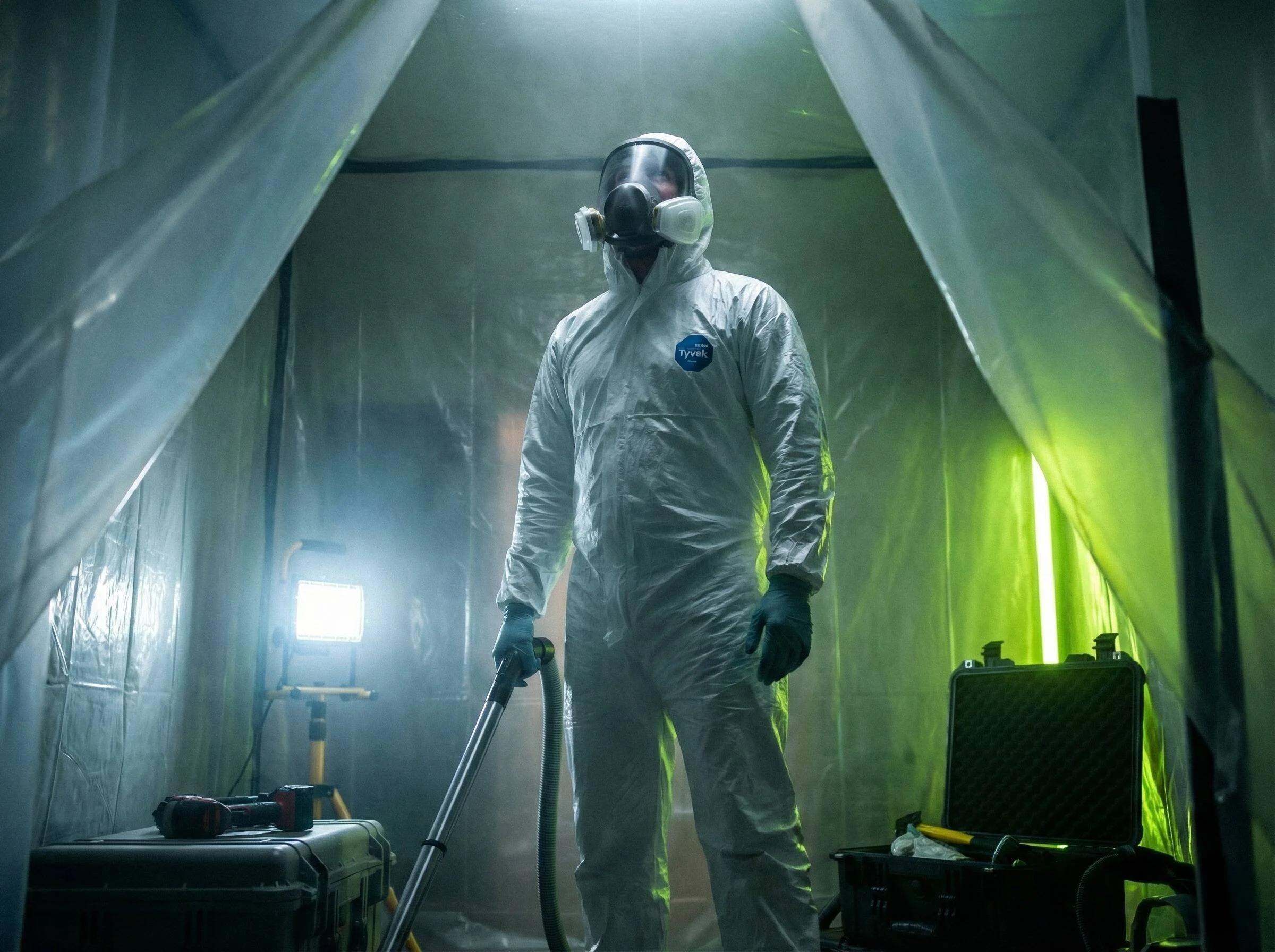
  • Protocol: Full Level C PPE, negative air HEPA containment, and hospital-grade biocides.
[ POROSITY & EVAPORATION DYNAMICS ]

IICRC S500 WATER LOSS CLASSES (1 THROUGH 4)

CLASS 1 // SLOW EVAPORATION

Minimal moisture absorption. Affects < 5% of the combined area of room surfaces. Porous materials (carpet, drywall) have absorbed little water.

CLASS 2 // FAST EVAPORATION

Significant water absorption. Affects 5% to 40% of room surfaces. Water has wicked up drywall < 24 inches and saturated carpet cushion and subflooring.

CLASS 3 // FASTEST EVAPORATION

Greatest water absorption. Affects > 40% of room surfaces. Water originated from overhead leaks, saturating ceilings, wall cavities, insulation, and framing.

CLASS 4 // SPECIALTY DRYING

Deeply bound structural moisture in low-porosity materials: solid hardwood flooring, plaster, multi-wythe brick, and dense concrete sub-slabs.

[ THERMODYNAMIC MOISTURE EXTRACTION ]

PSYCHROMETRIC SCIENCE & DRYING FORMULAS

Structural drying is thermodynamics, not guesswork. Water cannot be removed simply by blowing warm air; it requires establishing and sustaining an aggressive vapor pressure differential between saturated materials and the surrounding atmosphere.

[ THE GOVERNING EQUATION ]

VAPOR PRESSURE DIFFERENTIAL (ΔVP)

Evaporation occurs when the vapor pressure of bound moisture in the wet structural substrate ($VP_{mat}$) is higher than the vapor pressure of the surrounding process air ($VP_{air}$):

ΔVP = VPmaterial - VPair > 0.35 in-Hg

• High Ambient VP Danger: Along the Gulf Coast, summer ambient air frequently reaches 85°F and 85% RH (Vapor Pressure = 1.03 in-Hg). Air with high vapor pressure cannot absorb moisture from building components.

• Desiccant Depressurization: Envirogyn's industrial desiccant process air generates an ultra-dry atmosphere (< 25 GPP, VP < 0.20 in-Hg), creating an immense pressure vacuum that forces deeply absorbed water molecules to boil out of structural timber.

[ PSYCHROMETRIC METRICS ]

GRAINS PER POUND (GPP) VS. RELATIVE HUMIDITY

Relative Humidity (RH) is a temperature-dependent ratio that frequently creates false confidence. Grains Per Pound (GPP) measures the exact weight of water vapor dissolved in dry air (7,000 grains = 1 pound of water).

  • • Dew Point Monitoring: The precise temperature at which vapor condenses into liquid. We ensure structural surface temperatures remain at least 15°F above ambient dew point to eliminate secondary condensation on un-affected ceilings.
  • • Boundary Layer Shearing: Saturated surfaces develop a stagnant, humid microclimate (boundary layer). We position high-velocity axial air movers at calibrated 45° angles to continuously shear this layer, maximizing phase change.
  • • Equilibrium Moisture Content (EMC): Target baseline derived from unaffected timber within the same regional microclimate (typically 8% to 12% Wood Moisture Equivalent).
[ EMPIRICAL VERIFICATION AUDIT ]

DAILY PSYCHROMETRIC DRYING LOG TABLE

Court-defensible water restoration requires unbroken empirical documentation. Every 24 hours, Envirogyn technicians log ambient atmospheric conditions, dehumidifier exhaust performance, and wood moisture equivalent (% WME) across all affected zones until baseline equilibrium is restored.

DAY // PHASE CHAMBER TEMP RH (%) HUMIDITY RATIO DEW POINT VAPOR PRESSURE FRAMING STUD % WME DRYWALL CORE % OPERATIONAL STATUS
DAY 00 // TACTICAL DISPATCH 84.0°F 86.5% 156 GPP 79.2°F 1.02 in-Hg 36.8% (Saturated) 99.0% (Capillary Max) BULK EXTRACTION & CONTAINMENT
DAY 01 // STABILIZATION 80.5°F 58.2% 89 GPP 64.1°F 0.60 in-Hg 24.5% 46.2% LGR AIR SCRUBBING & SHEARING
DAY 02 // BOUND MOISTURE PULL 85.0°F 36.4% 64 GPP 54.8°F 0.43 in-Hg 17.8% 22.5% DESICCANT PROCESS AIR INJECTION
DAY 03 // EQUILIBRIUM SINK 79.0°F 25.1% 37 GPP 39.5°F 0.24 in-Hg 12.4% 13.8% CAVITY INJECTION DRYING
DAY 04 // DRY STANDARD ACHIEVED 74.5°F 21.8% 27 GPP 32.8°F 0.18 in-Hg 9.2% (Dry Baseline) 10.1% (Dry Baseline) CLEARANCE VERIFIED // S500 PASS
DATA VALIDATION: ASTM D4442 DIRECT OVEN-DRY CALIBRATION • TRRO SPECIFICATION 16 TAC § 78
[ INDUSTRIAL DEPLOYMENT ARSENAL ]

HEAVY EXTRACTION & DESICCANT HARDWARE FLEET

The extreme climate of the Texas Gulf Coast overpowers residential restoration equipment. Standard refrigerant dehumidifiers lose all extraction efficiency below 55 GPP. Envirogyn deploys trailer-mounted industrial desiccants and truck-mounted high-lift vacuums engineered for high-cube commercial structures.

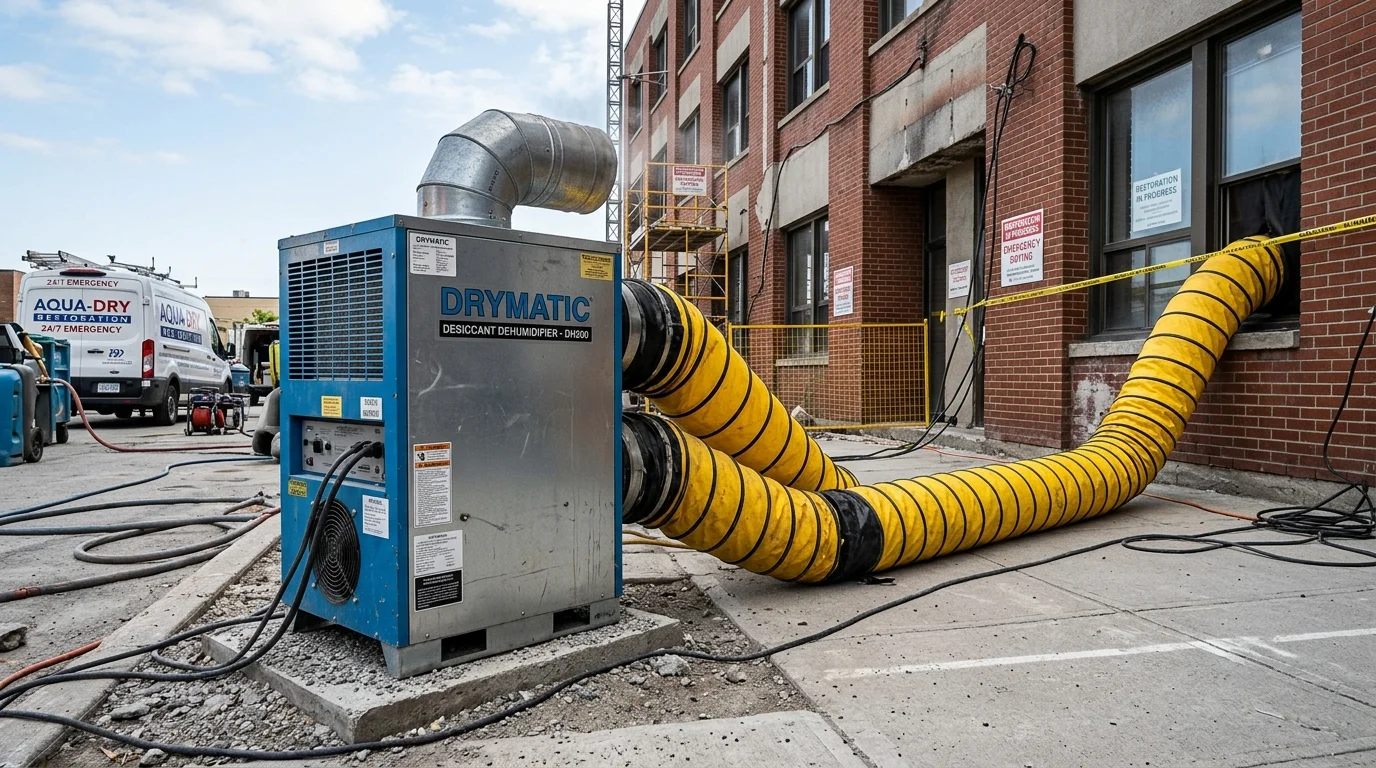
DESICCANT TRAILER FLEET // 15,000 CFM Commercial Desiccant Dehumidification Trailer deployed for large loss restoration
INDUSTRIAL CHEMICAL ABSORPTION

INDUSTRIAL DESICCANT DEHUMIDIFIERS

Engineered with silica gel rotor wheels that chemically bond with airborne moisture. Unlike refrigerant units that rely on condensation coils, desiccants operate flawlessly in sub-freezing or hyper-humid coastal heat, delivering process air below 20 GPP to draw moisture out of dense masonry, structural framing, and multi-ply commercial roof assemblies.

  • Airflow Capacity: 5,000 to 15,000 CFM Continuous Output.
  • Exhaust Dew Point: Sub-Zero Dew Point (< -10°F Capability).
  • Power Plant: Self-Contained Tier 4 Diesel Generator Trailer.
  • Application: Multi-Story Commercial Real Estate, Cleanrooms & High-Cube Warehouses.
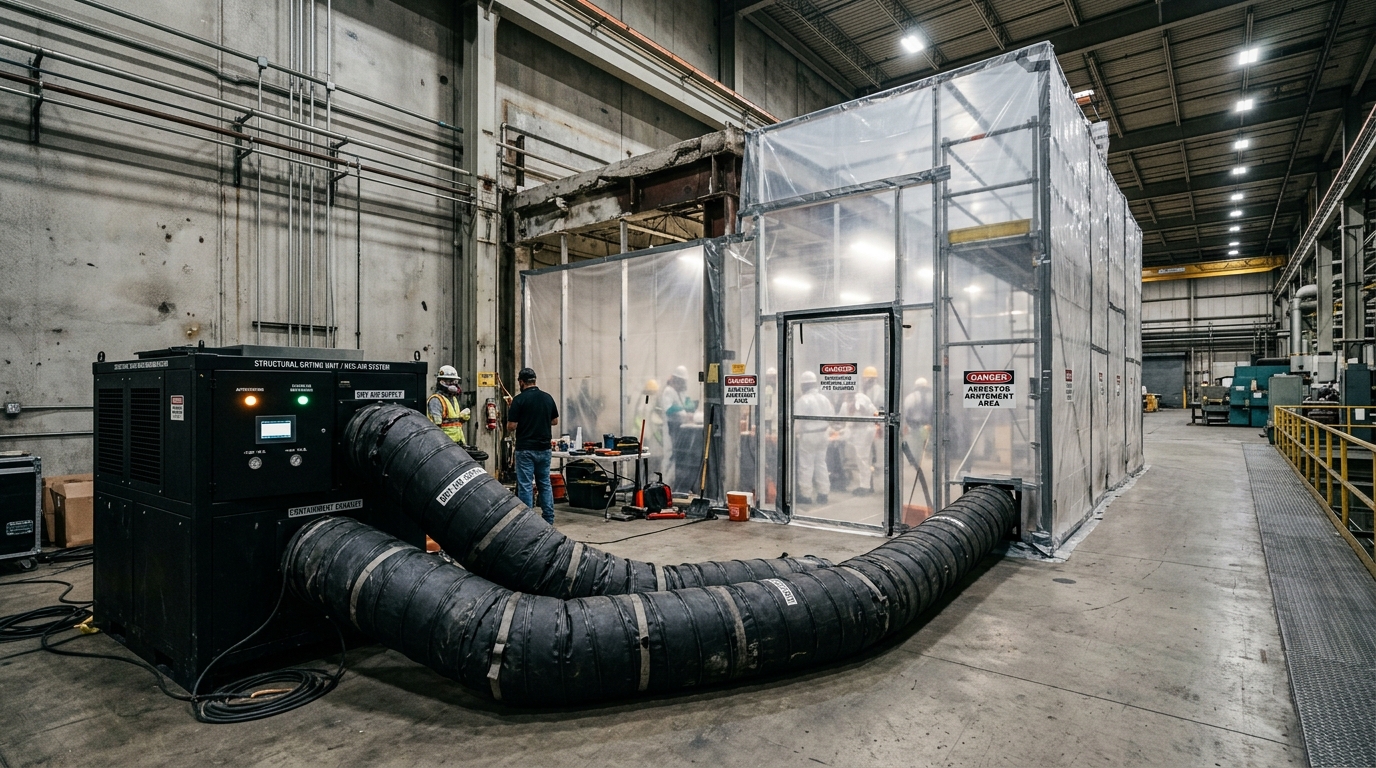
DRYING ZONE CONTAINMENT Engineered containment zone with localized desiccant ducting
PRECISION CLIMATE ZONING

LOW GRAIN REFRIGERANT (LGR) & ZONED DUCTING

Compact LGR units pre-cool air through an internal heat pipe before passing over evaporator coils, continuing to extract moisture down to 34 GPP. When paired with negative-pressure lay-flat poly ducting, our technicians create targeted drying microclimates inside occupied commercial complexes without displacing unaffected tenant suites.

  • Condensate Yield: Up to 250 Pints/Day per Unit (AHAM Standard).
  • Efficiency: Operates down to 34 GPP (35% lower than conventional units).
  • Targeted Injection: In-wall cavity drying systems with manifold injectors.
  • Acoustic Spec: Sound-attenuated for operating in active professional offices.
[ TECHNICAL FAQ BRIEFING ]

WATER MITIGATION DISPATCH INTELLIGENCE

Frequently addressed operational, regulatory, and insurance parameters for commercial property managers and homeowners navigating catastrophic water losses.

How quickly will toxic mold colonize following a water intrusion event in coastal Texas? ›
Under typical Gulf Coast conditions (temperatures between 75°F and 90°F with relative humidity exceeding 70%), fungal spores of Aspergillus, Penicillium, and Cladosporium begin germination within 24 to 48 hours. Slower-growing toxic species like Stachybotrys chartarum establish active colonization within 72 hours on cellulose-rich substrates like drywall and insulation. Immediate physical extraction and rapid psychrometric moisture reduction within 24 hours are critical to prevent a water loss from escalating into a regulated mold remediation project.
Can high-end solid hardwood flooring and concrete slabs be saved without demolition? ›
Yes. Using specialized high-pressure vacuum mat systems (such as Injectidry systems) paired with industrial desiccant process air, bound moisture can be pulled directly upward through the grain pores of solid hardwood, subflooring, and dense concrete sub-slabs. By managing the vapor pressure differential, we eliminate cupping, crowning, and buckling without tearing out high-value exotic timbers.
How does Envirogyn coordinate billing with property insurance carriers? ›
We document all losses using Xactimate®, the standardized estimating software mandated by major commercial and residential insurance carriers. Every charge corresponds to exact IICRC S500 line items backed by daily psychrometric drying logs, thermal thermography, moisture-mapping diagrams, and photographic timestamped evidence. We work directly with insurance adjusters to ensure court-defensible claims approval without out-of-pocket client surprises.
Why must Category 3 (Black Water) losses undergo mandatory biocontainment? ›
Category 3 water (sewage backups, hurricane surge, or floodwater) contains gross biological contaminants, coliform bacteria, enteric viruses, and hazardous toxins. Under OSHA 29 CFR 1910.120 and ANSI/IICRC S500, technicians must establish critical containment barriers under negative pressure with HEPA filtration to prevent aerosolized bio-pathogens from migrating into unaffected habitable zones. Saturated porous materials cannot be sanitized and must be excised under controlled conditions.
24/7 RAPID RESPONSE DISPATCH

ACTIVE WATER EMERGENCY? IMMEDIATE DEPLOYMENT UNDER 60 MINUTES

Standing water degrades by the minute. Our Galveston County and Houston rapid-response crews are on constant 24/7 standby with truck-mounted extraction and desiccant units ready to deploy.