Lead Inspections & Risk Assessments
Non-destructive XRF spectrum paint analysis, comprehensive risk assessments, and EPA/HUD dust wipe clearance testing for residential, commercial, and historical Texas real estate.
Critical Environmental Protection
Structures constructed prior to 1978 present hidden lead paint liabilities that jeopardize occupant safety, trigger federal enforcement, and impact transaction values.
Protect Your Family
Lead exposure is especially harmful to children and pregnant women, causing irreversible cognitive deficits, behavioral disruption, and long-term developmental challenges even at micro-concentrations.
Ensure Compliance
Stay strictly compliant with EPA's Renovation, Repair, and Painting (RRP) Rule (40 CFR Part 745) and Texas DSHS mandates, insulating owners and contractors from catastrophic penalties up to $37,500/day.
Secure Property Value
Certified lead-safe documentation is indispensable for property transactions, historic renovations, lender approvals, and commercial portfolio valuation across the Houston-Galveston region.
Gain Peace of Mind
Independent diagnostic testing by an unconflicted firm ensures your environment has been professionally assessed without upselling abatement services, delivering objective certitude.
Lead Diagnostics & Risk Solutions
From non-destructive isotopic XRF scans to HUD post-abatement dust wipe clearances, Envirogyn deploys complete diagnostic capabilities.
Lead Inspector Services
Our certified Lead Inspectors perform an exhaustive, surface-by-surface investigation to identify the exact presence and concentration of lead-based paint across architectural components. Crucial for real estate due diligence and pre-renovation scopes.

Lead Risk Assessor Services
Our licensed Risk Assessors isolate active hazard pathways—evaluating paint condition, friction impact points, and deteriorated substrates. We deliver an engineered hazard control blueprint outlining interim controls and long-term abatement options.
Post-Abatement Clearance Testing
Following lead removal or abatement activities, our independent assessors execute visual assessments and dust wipe clearance sampling to verify complete decontamination below EPA thresholds (< 10 μg/ft² floors, < 100 μg/ft² sills).
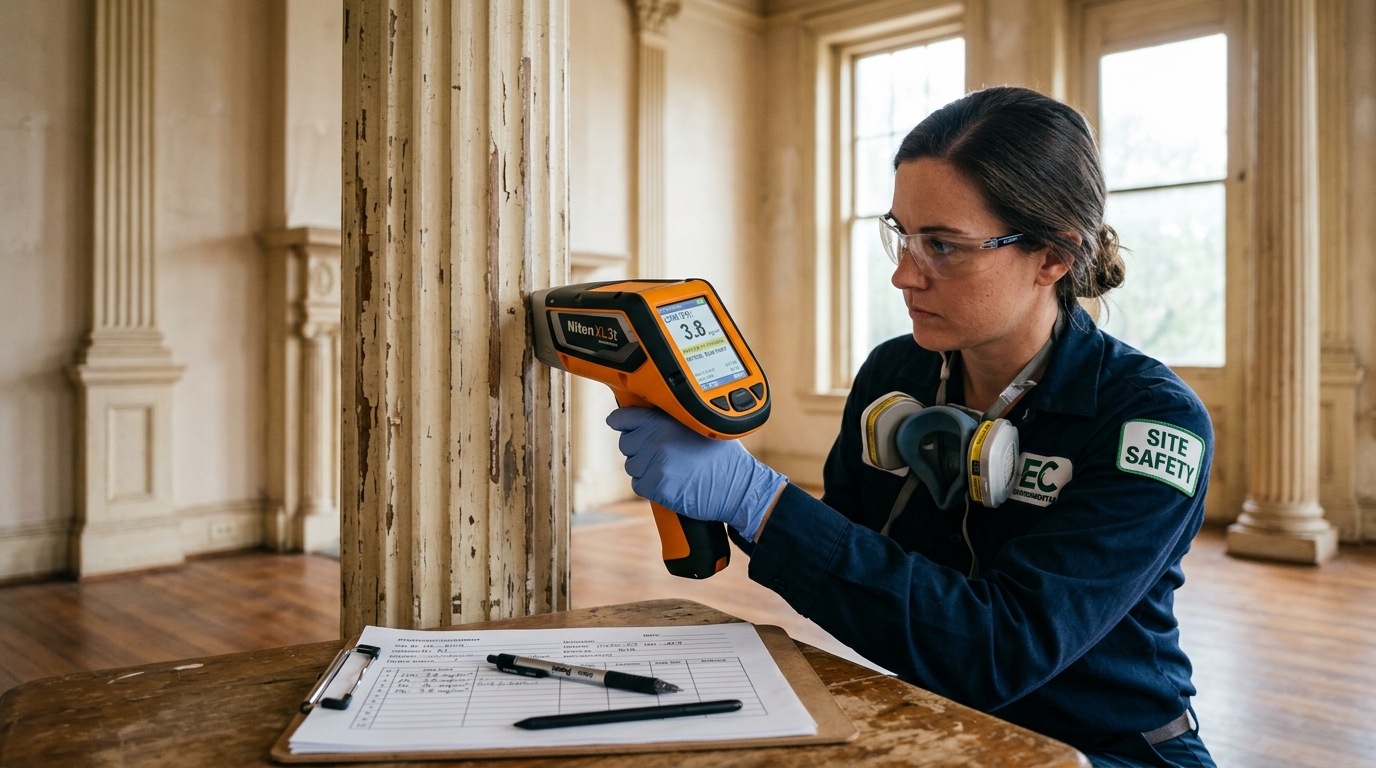
Lead-Based Paint Testing
Utilizing advanced portable XRF analyzers, we generate instant, non-destructive quantitative lead readings (1.0 mg/cm² standard threshold) through 30+ layers of paint without defacing moldings, plaster, or architectural woodwork.
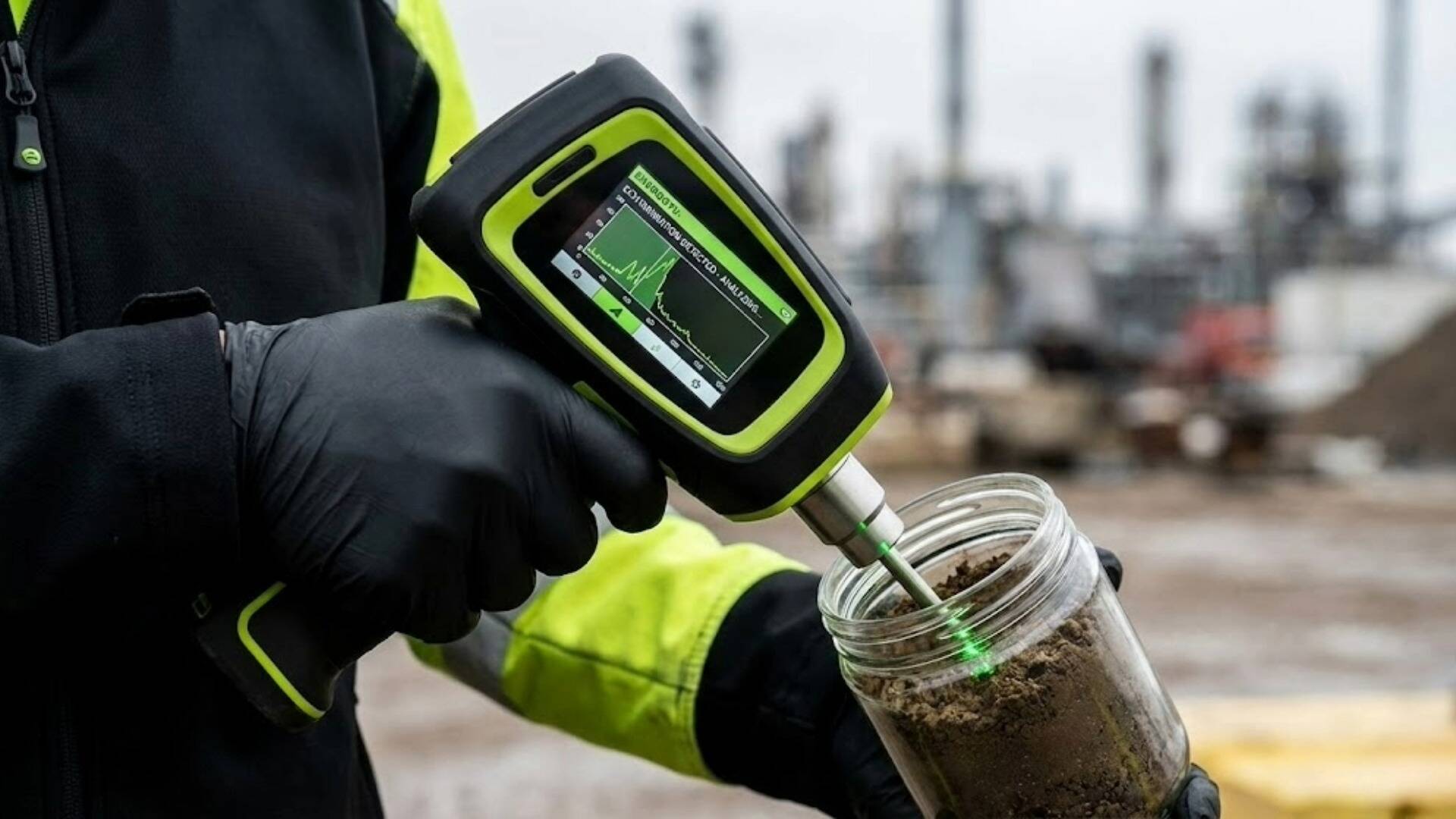
Soil & Water Contamination
We collect calibrated soil samples around exterior drip lines, building foundations, and child play areas, alongside first-draw drinking water samples to detect legacy lead service lines and solder leaching.

Lead Dust Wipe Sampling
Microscopic lead dust is the primary ingestion pathway in children. We perform standardized ASTM dust wipes across high-traffic floors and window wells to certify clean baseline living conditions.
The 4-Stage Inspection Lifecycle
Standardized military precision applied to environmental hazard analysis.
Consultation
We review building age, property history, planned renovations, and transaction deadlines to formulate a targeted testing strategy.
On-Site Inspection
A licensed DSHS professional conducts non-destructive XRF spectrum scans, visual assessment, and targeted environmental sample collection.
Accredited Lab Analysis
When required, dust wipes, soil cores, or paint chips are analyzed via EPA NLLAP-accredited chemical spectroscopy for legal-grade certitude.
Comprehensive Reporting
You receive an authoritative report detailing hazard distributions, quantitative readings, and clear mitigation blueprints.
Frequently Asked Questions
Inspector vs. Risk Assessor: What's the difference? ▾
A Lead Inspector's role is strictly diagnostic: to identify where lead-based paint is located across all surfaces. A Lead Risk Assessor does that, plus evaluates the condition of the paint, determines whether active lead hazards exist in dust or soil, and provides an actionable strategy and priority matrix for controlling or abating those hazards. A Risk Assessment is the comprehensive service required for effective liability management.
When should I hire a lead professional? ▾
You should engage a licensed professional if your residential or commercial property was built prior to 1978, particularly prior to remodeling or repainting, during the federal 10-day inspection contingency in real estate acquisitions (TREC Form OP-L), or if chipping paint presents potential exposure vectors to children.
Is the inspection process disruptive? ▾
Our assessments are completely non-destructive and minimally invasive. We utilize advanced portable XRF analyzers that read elemental lead concentrations in seconds through multiple coating layers without cutting or damaging finishes. Dust wipe and soil sampling procedures are fast, clean, and self-contained.
What happens if lead hazards are found? ▾
Our final report documents the exact location, substrate condition, and hazard level of all positive components. If you have selected a Risk Assessment, the report provides a prioritized remediation plan—including interim stabilization controls, component replacement, or certified abatement protocol design.
Get Professional Guidance
Take the first step towards a certified safe environment. Speak directly with a Texas DSHS Certified Lead Risk Assessor today.